Sunday, August 31, 2014

The Strike

The BCTF/BC Liberal Dispute Is Affecting Football

I don't normally get political here, but these ain't normal times and political is affecting "here!"

The views expressed below are one's I agree with.  I am a member of no party.  If you do not like them, simply click away from this blog....I believe that we are at a historical turning point in terms of what kind of BC/Canada we will all be living in sooner rather than later.

A lot of coaches are BCTF members.  Their voice doesn't get through the Mainstream Media Filters.   I don't speak for them.  They own their own souls.  Perhaps however, some of this resonates to them...or you, whoever you are "out-there".

Gridiron

There is a lot of folks asking "why can they not just come to a deal".  Obviously, simplistic explanations are not useful.  The below read may prove useful however.  From Christian Obeck @cobeck123

End Quote

Some context from CBC Radio

http://podcast.cbc.ca/mp3/podcasts/bcearlyedition_20140829_46449.mp3

Some Context From Madame Justice Griffith

In her January 28th 2014 ruling, Madam Justice Susan Griffin wrote:
(Paragraph numbers in parentheses)

[545] I have also found that while government is entitled to state its policy and fiscal objectives by way of mandates for bargaining given to PSEC and BCPSEA, I note that the protection of s. 2(d) Charter rights means that it must not draw the parameters of those objectives so narrowly that it means that the employer will not consider the BCTF representations in good faith. This would make it effectively impossible for the BCTF to attempt to influence workplace goals.

[564] This means that as of April 13, 2012, the laws declared unconstitutional in the Bill 28 Decision were no longer in effect from the date of their enactment. For clarity, an additional declaration to this effect is made in the Bill 28 Action as part of the application by the BCTF for additional remedies in that action.

[565] The result is that as of April 13, 2012, the BCTF had the right to engage in collective bargaining over the Working Conditions; it also means that as of July 2002 the Working Conditions clauses were returned to the collective agreement between the BCTF and BCPSEA. All, of course, later subject to the provisions of Bill 22 being brought into force the next day and this Court’s findings regarding the constitutionality of those provisions.

A reasonable conclusion is that Para's 545/565 mean that the gov't yet again is bargaining in bad faith.

Now, some thoughts about the BC Liberal Rhetoric/Tactics we have all been subjected to. Things are really going to heat-up now.  Time for some critical thinking about what is spewed forth:

 Critical Thinking/Listening: You are all going to see more of the following from BC Liberal Leadership on Down during the current "Debate". It is about distorting and attacking ideas, individuals and organizations (BCTF) by going on the attack:

".... It is better to score points than to engage in actual arguments, in other words, "to score points while avoiding debate."..Further, "Point scoring works because most audience members fail to analyze what they hear. Rather, they register only a key few points, and form a vague 'impression' of whose argument was stronger."

"Part of the strategy is to recycle the same claims over and again, in as many settings as possible. 'If people hear something often enough,' ....it would seem 'they come to believe it."

Further..."'Creating negative connotations by name calling is done to try to get the audience to reject a person or idea on the basis of negative associations, without allowing a real examination of that person or idea,"

Lastly, .."they use the opposite of name calling with glittering generalities like "Affordability, Families First", "Get Back to the Table", "Get a Negotiated Deal", "available 24-7" and Fassbender's favorite "I'm a Grandpa".

Sound Familiar Anyone? It should to anyone with a moderate understanding of 20th Century History........This was precisely the tactic developed by the Nazi Minister of Propaganda, Joseph Goebbels, which he called "the big lie."  It worked then and it works now, especially if used in a funded, coordinated fashion.


I would submit to you the following:

The BC Liberal Govt. wants the court case to be annulled via an agreement with teachers that replaces it. Essentially, they conducted a theft of the Charter Rights of 40, 000 plus citizens, were convicted twice, are appealing, will likely lose and want the victim to to say "OK, I will validate your theft by negotiating about it and let you keep a major chunk of the proceeds"...also, in the future, the cookbook for quasi-fascist government will be to conduct an illegal act, make the other side broke by trying endlessly it in the courts (if they even have the resources to get there) and then wait-em out til they cave. The broken shell of the victim shall stand in the way no more...rights of the people? What rights? If the Charter Of Rights and Freedoms is sick/under assault, so is this thing called Canada as we know it.  This is really, really bad.

By the way, dollars do not trump Charter Rights in any instance. If you believe so, brown shirts, the club, censorship, book burning, forced exile, gulags, informants and secret police are the tools of your trade...all because you have no argument to advance of your own by lawful, liberal democratic means. This may sound extreme, but it is the time honoured and proven path of regimes/groups who do not honour the law...ie: Charter of Rights and Freedoms".

Affordability? Listen through this:


Finally, if you are a BC Liberal or one of their supporters out there (and there are overwhelmingly many, many, good, thoughtful people among these two groups), think long and hard about not questioning your leadership as they march you over the historical cliff...  You will be painted by your leadership's brush with this debacle for years to come.  You will own it when they are long, long gone.

Sunday, June 8, 2014

Introspection

"Share your fears with yourself and your courage with others. You will inspire people to do things that are incredible." (Franklin "Doug" Miller)
 
OK Gang,
 
Reflecting on your past and current life experience, what does this mean to you? 

Wednesday, May 28, 2014

Ten Life Lessons From A Navy Seal

Read and Then View The Video

Could This Apply To Playing or Coaching Football?  You Bet It Could!!


Naval Admiral William H. McRaven returned to his alma mater last week and spoke to the graduates with lessons he learned from his basic SEAL training.

Here’s his amazing Commencement Address at University of Texas at Austin 2014.


The University’s slogan is,
“What starts here changes the world.”
I have to admit—I kinda like it.
“What starts here changes the world.”
Tonight there are almost 8,000 students graduating from UT.
That great paragon of analytical rigor, Ask.Com says that the average American will meet 10,000 people in their lifetime.
That’s a lot of folks.

But, if every one of you changed the lives of just ten people—and each one of those folks changed the lives of another ten people—just ten—then in five generations—125 years—the class of 2014 will have changed the lives of 800 million people.
800 million people—think of it—over twice the population of the United States. Go one more generation and you can change the entire population of the world—8 billion people.
If you think it’s hard to change the lives of ten people—change their lives forever—you’re wrong.

I saw it happen every day in Iraq and Afghanistan.
A young Army officer makes a decision to go left instead of right down a road in Baghdad and the ten soldiers in his squad are saved from close-in ambush. 
In Kandahar province, Afghanistan, a non-commissioned officer from the Female Engagement Team senses something isn’t right and directs the infantry platoon away from a 500 pound IED, saving the lives of a dozen soldiers.

But, if you think about it, not only were these soldiers saved by the decisions of one person, but their children yet unborn—were also saved. And their children’s children—were saved.
Generations were saved by one decision—by one person.

But changing the world can happen anywhere and anyone can do it.
So, what starts here can indeed change the world, but the question is… what will the world look like after you change it?

Well, I am confident that it will look much, much better, but if you will humor this old sailor for just a moment, I have a few suggestions that may help you on your way to a better a world.
And while these lessons were learned during my time in the military, I can assure you that it matters not whether you ever served a day in uniform.
It matters not your gender, your ethnic or religious background, your orientation, or your social status.

Our struggles in this world are similar and the lessons to overcome those struggles and to move forward—changing ourselves and the world around us—will apply equally to all.
I have been a Navy SEAL for 36 years. But it all began when I left UT for Basic SEAL training in Coronado, California.

Basic SEAL training is six months of long torturous runs in the soft sand, midnight swims in the cold water off San Diego, obstacles courses, unending calisthenics, days without sleep and always being cold, wet and miserable.
It is six months of being constantly harassed by professionally trained warriors who seek to find the weak of mind and body and eliminate them from ever becoming a Navy SEAL.
But, the training also seeks to find those students who can lead in an environment of constant stress, chaos, failure and hardships.

To me basic SEAL training was a life time of challenges crammed into six months.
So, here are the ten lessons I learned from basic SEAL training that hopefully will be of value to you as you move forward in life.

Every morning in basic SEAL training, my instructors, who at the time were all Vietnam veterans, would show up in my barracks room and the first thing they would inspect was your bed.  If you did it right, the corners would be square, the covers pulled tight, the pillow centered just under the headboard and the extra blanket folded neatly at the foot of the rack—rack—that’s Navy talk for bed.  It was a simple task—mundane at best. But every morning we were required to make our bed to perfection. It seemed a little ridiculous at the time, particularly in light of the fact that were aspiring to be real warriors, tough battle hardened SEALs—but the wisdom of this simple act has been proven to me many times over.
If you make your bed every morning you will have accomplished the first task of the day. It will give you a small sense of pride and it will encourage you to do another task and another and another.  By the end of the day, that one task completed will have turned into many tasks completed. Making your bed will also reinforce the fact that little things in life matter.
If you can’t do the little things right, you will never do the big things right.
And, if by chance you have a miserable day, you will come home to a bed that is made—that you made—and a made bed gives you encouragement that tomorrow will be better.

#1. If you want to change the world, start off by making your bed.

During SEAL training the students are broken down into boat crews. Each crew is seven students—three on each side of a small rubber boat and one coxswain to help guide the dingy.
Every day your boat crew forms up on the beach and is instructed to get through the surf zone and paddle several miles down the coast.
In the winter, the surf off San Diego can get to be 8 to 10 feet high and it is exceedingly difficult to paddle through the plunging surf unless everyone digs in.
Every paddle must be synchronized to the stroke count of the coxswain. Everyone must exert equal effort or the boat will turn against the wave and be unceremoniously tossed back on the beach.
For the boat to make it to its destination, everyone must paddle.
You can’t change the world alone—you will need some help— and to truly get from your starting point to your destination takes friends, colleagues, the good will of strangers and a strong coxswain to guide them. 
#2. If you want to change the world, find someone to help you paddle.

Over a few weeks of difficult training my SEAL class which started with 150 men was down to just 35. There were now six boat crews of seven men each.
I was in the boat with the tall guys, but the best boat crew we had was made up of the the little guys—the munchkin crew we called them—no one was over about 5-foot five.
The munchkin boat crew had one American Indian, one African American, one Polish American, one Greek American, one Italian American, and two tough kids from the mid-west.
They out paddled, out-ran, and out swam all the other boat crews.
The big men in the other boat crews would always make good natured fun of the tiny little flippers the munchkins put on their tiny little feet prior to every swim.
But somehow these little guys, from every corner of the Nation and the world, always had the last laugh— swimming faster than everyone and reaching the shore long before the rest of us.
SEAL training was a great equalizer. Nothing mattered but your will to succeed. Not your color, not your ethnic background, not your education and not your social status.

#3. If you want to change the world, measure a person by the size of their heart, not the size of their flippers.

Several times a week, the instructors would line up the class and do a uniform inspection. It was exceptionally thorough.
Your hat had to be perfectly starched, your uniform immaculately pressed and your belt buckle shiny and void of any smudges.
But it seemed that no matter how much effort you put into starching your hat, or pressing your uniform or polishing your belt buckle—- it just wasn’t good enough.
The instructors would find “something” wrong.
For failing the uniform inspection, the student had to run, fully clothed into the surfzone and then, wet from head to toe, roll around on the beach until every part of your body was covered with sand.
The effect was known as a “sugar cookie.” You stayed in that uniform the rest of the day—cold, wet and sandy.
There were many a student who just couldn’t accept the fact that all their effort was in vain. That no matter how hard they tried to get the uniform right—it was unappreciated.
Those students didn’t make it through training.
Those students didn’t understand the purpose of the drill. You were never going to succeed. You were never going to have a perfect uniform.
Sometimes no matter how well you prepare or how well you perform you still end up as a sugar cookie.
It’s just the way life is sometimes.

#4. If you want to change the world get over being a sugar cookie and keep moving forward.

Every day during training you were challenged with multiple physical events—long runs, long swims, obstacle courses, hours of calisthenics—something designed to test your mettle.
Every event had standards—times you had to meet. If you failed to meet those standards your name was posted on a list and at the end of the day those on the list were invited to—a “circus.”
A circus was two hours of additional calisthenics—designed to wear you down, to break your spirit, to force you to quit.
No one wanted a circus.
A circus meant that for that day you didn’t measure up. A circus meant more fatigue—and more fatigue meant that the following day would be more difficult—and more circuses were likely.
But at some time during SEAL training, everyone—everyone—made the circus list.
But an interesting thing happened to those who were constantly on the list. Over time those students-—who did two hours of extra calisthenics—got stronger and stronger.
The pain of the circuses built inner strength-built physical resiliency.
Life is filled with circuses.
You will fail. You will likely fail often. It will be painful. It will be discouraging. At times it will test you to your very core.

#5. But if you want to change the world, don’t be afraid of the circuses.

At least twice a week, the trainees were required to run the obstacle course. The obstacle course contained 25 obstacles including a 10-foot high wall, a 30-foot cargo net, and a barbed wire crawl to name a few.
But the most challenging obstacle was the slide for life. It had a three level 30 foot tower at one end and a one level tower at the other. In between was a 200-foot long rope.
You had to climb the three tiered tower and once at the top, you grabbed the rope, swung underneath the rope and pulled yourself hand over hand until you got to the other end.
The record for the obstacle course had stood for years when my class began training in 1977.
The record seemed unbeatable, until one day, a student decided to go down the slide for life—head first.
Instead of swinging his body underneath the rope and inching his way down, he bravely mounted the TOP of the rope and thrust himself forward.
It was a dangerous move—seemingly foolish, and fraught with risk. Failure could mean injury and being dropped from the training.
Without hesitation—the student slid down the rope—perilously fast, instead of several minutes, it only took him half that time and by the end of the course he had broken the record.

#6. If you want to change the world sometimes you have to slide down the obstacle head first.

During the land warfare phase of training, the students are flown out to San Clemente Island which lies off the coast of San Diego.
The waters off San Clemente are a breeding ground for the great white sharks. To pass SEAL training there are a series of long swims that must be completed. One—is the night swim.
Before the swim the instructors joyfully brief the trainees on all the species of sharks that inhabit the waters off San Clemente.
They assure you, however, that no student has ever been eaten by a shark—at least not recently.
But, you are also taught that if a shark begins to circle your position—stand your ground. Do not swim away. Do not act afraid.
And if the shark, hungry for a midnight snack, darts towards you—then summons up all your strength and punch him in the snout and he will turn and swim away.
There are a lot of sharks in the world. If you hope to complete the swim you will have to deal with them.

#7. So, if you want to change the world, don’t back down from the sharks.

As Navy SEALs one of our jobs is to conduct underwater attacks against enemy shipping. We practiced this technique extensively during basic training.
The ship attack mission is where a pair of SEAL divers is dropped off outside an enemy harbor and then swims well over two miles—underwater—using nothing but a depth gauge and a compass to get to their target.
During the entire swim, even well below the surface there is some light that comes through. It is comforting to know that there is open water above you.
But as you approach the ship, which is tied to a pier, the light begins to fade. The steel structure of the ship blocks the moonlight—it blocks the surrounding street lamps—it blocks all ambient light.
To be successful in your mission, you have to swim under the ship and find the keel—the center line and the deepest part of the ship.
This is your objective. But the keel is also the darkest part of the ship—where you cannot see your hand in front of your face, where the noise from the ship’s machinery is deafening and where it is easy to get disoriented and fail.
Every SEAL knows that under the keel, at the darkest moment of the mission—is the time when you must be calm, composed—when all your tactical skills, your physical power and all your inner strength must be brought to bear.

#8. If you want to change the world, you must be your very best in the darkest moment.
The ninth week of training is referred to as “Hell Week.” It is six days of no sleep, constant physical and mental harassment and—one special day at the Mud Flats—the Mud Flats are an area between San Diego and Tijuana where the water runs off and creates the Tijuana slue’s—a swampy patch of terrain where the mud will engulf you.
It is on Wednesday of Hell Week that you paddle down to the mud flats and spend the next 15 hours trying to survive the freezing cold mud, the howling wind and the incessant pressure to quit from the instructors.
As the sun began to set that Wednesday evening, my training class, having committed some “egregious infraction of the rules” was ordered into the mud.
The mud consumed each man till there was nothing visible but our heads. The instructors told us we could leave the mud if only five men would quit—just five men and we could get out of the oppressive cold.
Looking around the mud flat it was apparent that some students were about to give up. It was still over eight hours till the sun came up—eight more hours of bone chilling cold.
The chattering teeth and shivering moans of the trainees were so loud it was hard to hear anything and then, one voice began to echo through the night—one voice raised in song.
The song was terribly out of tune, but sung with great enthusiasm.
One voice became two and two became three and before long everyone in the class was singing.
We knew that if one man could rise above the misery then others could as well.
The instructors threatened us with more time in the mud if we kept up the singing—but the singing persisted.
And somehow—the mud seemed a little warmer, the wind a little tamer and the dawn not so far away.
If I have learned anything in my time traveling the world, it is the power of hope. The power of one person—Washington, Lincoln, King, Mandela and even a young girl from Pakistan—Malala—one person can change the world by giving people hope.

#9. So, if you want to change the world, start singing when you’re up to your neck in mud.

Finally, in SEAL training there is a bell. A brass bell that hangs in the center of the compound for all the students to see.
All you have to do to quit—is ring the bell. Ring the bell and you no longer have to wake up at 5 o’clock. Ring the bell and you no longer have to do the freezing cold swims.
Ring the bell and you no longer have to do the runs, the obstacle course, the PT—and you no longer have to endure the hardships of training.
Just ring the bell.

#10. If you want to change the world don’t ever, ever ring the bell.

To the graduating class of 2014, you are moments away from graduating. Moments away from beginning your journey through life. Moments away from starting to change the world—for the better.
It will not be easy.
But, YOU are the class of 2014—the class that can affect the lives of 800 million people in the next century.
Start each day with a task completed.
Find someone to help you through life.
Respect everyone.
Know that life is not fair and that you will fail often, but if you take take some risks, step up when the times are toughest, face down the bullies, lift up the downtrodden and never, ever give up—if you do these things, then next generation and the generations that follow will live in a world far better than the one we have today and—what started here will indeed have changed the world—for the better.

Thank you very much. Hook ‘em horns.

Monday, May 26, 2014

Trojan Football Analysis

Found this to be an interesting site that had some very practical material we used last year.  Loved the old Nebraska stuff!!


Click Above Image To Proceed

Sunday, May 25, 2014

Genghis KHAN and Football


What the hec do Genghis Khan and The Mongols have to do with football?  I say nothing; and Everything!

History has a way of talking back to us all.  Free yourself of your prejudices, preconceptions and things taken for granted as truth.  Look back at those who did, those who didn't, those who won, those who lost and most importantly, the philosophy, principles and ideas that carried them forth.  Are there not lessons to learn that you can apply from the most mundane, individualistic pursuits of your life to the broadest, most far reaching endeavours? Movements that you are wittingly or unwittingly a part of?

If you want to see your world as a whole, your football coaching world or any other component of your existence with greater clarity, go find it in our collective past and place your life's template as you see it over the top.  With close inspection, the congruencies will be striking. Relationships, tactics, strategies, politics, principles....it is a bountiful harvest and WILL bring meaning to your experience.

All Love Gang!  GI

PS. Great Video Link at bottom of this post.  Read text below prior to viewing as it will be all the more sweet.

From Jack Weatherford's Genghis KHAN and the Making of the Modern World :

Fate did not hand Genghis Khan his destiny; he made it for himself. It seemed highly unlikely that he would ever have enough horses to create a Spirit Banner, much less that he might follow it across the world. The boy who became Genghis Khan grew up in a world of excessive tribal violence, including murder, kidnapping, and enslavement. As the son in an outcast family left to die on the steppes, he probably encountered no more than a few hundred people in his entire childhood, and he received no formal education. From this harsh setting, he learned, in dreadful detail, the full range of human emotion: desire, ambition, and cruelty. While still a child he killed his older half brother, was captured and enslaved by a rival clan, and managed to escape from his captors.

Under such horrific conditions, the boy showed an instinct for survival
and self-preservation, but he showed little promise of the achievements he would one day make. As a child, he feared dogs and he cried easily. His younger brother was stronger than he was and a better archer and wrestler; his half brother bossed him around and picked on him. Yet from these degraded circumstances of hunger, humiliation, kidnapping, and slavery, he began the long climb to power. Before reaching puberty, he had already formed the two most important relationships of his life. He swore eternal friendship and allegiance to a slightly older boy who became the closest friend of his youth but turned into the most dedicated enemy of his adulthood, and he found the girl whom he would love forever and whom he made the mother of emperors. The dual capacity for friendship and enmity forged in Genghis Khan’s youth endured throughout his life and became the defining trait of his character. The tormenting questions of love and paternity that arose beneath a shared blanket or in the flickering firelight of the family hearth became projected onto the larger stage of world history. His personal goals, desires, and fears engulfed the world.

Year by year, he gradually defeated everyone more powerful than he was, until he had conquered every tribe on the Mongolian steppe. At the age of fifty, when most great conquerors had already put their fighting days behind them, Genghis Khan’s Spirit Banner beckoned him out of his remote homeland to confront the armies of the civilized people who had harassed and enslaved the nomadic tribes for centuries. In the remaining years of life, he followed that Spirit Banner to repeated victory across the Gobi and the Yellow River into the kingdoms of China, through the central Asian lands of the Turks and the Persians, and across the mountains of Afghanistan to the Indus River.

In conquest after conquest, the Mongol army transformed warfare into an intercontinental affair fought on multiple fronts stretching across thousands of miles. Genghis Khan’s innovative fighting techniques made the heavily armored knights of medieval Europe obsolete, replacing them with disciplined cavalry moving in coordinated units. Rather than relying on defensive fortifications, he made brilliant use of speed and surprise on the battlefield, as well as perfecting siege warfare to such a degree that he ended the era of walled cities. Genghis Khan taught his people not only to fight across incredible distances but to sustain their campaign over years, decades, and, eventually, more than three generations of constant fighting.

In twenty-five years, the Mongol army subjugated more lands and people than the Romans had conquered in four hundred years. Genghis Khan, together with his sons and grandsons, conquered the most densely populated civilizations of the thirteenth century. Whether measured by the total number of people defeated, the sum of the countries annexed, or by the total area occupied, Genghis Khan conquered more than twice as much as any other man in history. The hooves of the Mongol warriors’ horses splashed in the waters of every river and lake from the Pacific Ocean to the Mediterranean Sea. At its zenith, the empire covered between 11 and 12 million contiguous square miles, an area about the size of the African continent and considerably larger than North America, including the United States, Canada, Mexico, Central America, and the islands of the Caribbean combined. It stretched from the snowy tundra of Siberia to the hot plains of India, from the rice paddies of Vietnam to the wheat fields of Hungary, and from Korea to the Balkans. The majority of people today live in countries conquered by the Mongols; on the modern map, Genghis Kahn’s conquests include thirty countries with well over 3 billion people. The most astonishing aspect of this achievement is that the entire Mongol tribe under him numbered around a million, smaller than the workforce of some modern corporations. From this million, he recruited his army, which was comprised of no more than one hundred thousand warriors—a group that could comfortably fit into the larger sports stadiums of the modern era.

In American terms, the accomplishment of Genghis Khan might be understood if the United States, instead of being created by a group of educated merchants or wealthy planters, had been founded by one of its illiterate slaves, who, by the sheer force of personality, charisma, and determination, liberated America from foreign rule, united the people, created an alphabet, wrote the constitution, established universal religious freedom, invented a new system of warfare, marched an army from Canada to Brazil, and opened roads of commerce in a free-trade zone that stretched across the continents. On every level and from any perspective, the scale and scope of Genghis Khan’s accomplishments challenge the limits of imagination and tax the resources of scholarly explanation.

As Genghis Khan's cavalry charged across the thirteenth century, he redrew the boundaries of the world. His architecture was not in stone but in nations. Unsatisfied with the vast number of little kingdoms, Genghis Khan consolidated smaller countries into larger ones. In eastern Europe, the Mongols united a dozen Slavic principalities and cities into one large Russian state. In eastern Asia, over a span of three generations, they created the country of China by weaving together the remnants of the Sung dynasty in the south with the lands of the Jurched in Manchuria, Tibet in the west, the Tangut Kingdom adjacent to the Gobi, and the Uighur lands of eastern Turkistan. As the Mongols expanded their rule, they created countries such as Korea and India that have survived to modern times in approximately the same borders fashioned by their Mongol conquerors.


Genghis Khan's empire connected and amalgamated the many civilizations around him into a new world order. At the time of his birth in 1162, the Old World consisted of a series of regional civilizations each of which could claim virtually no knowledge of any civilization beyond its closest neighbor. No one in China had heard of Europe, and no one in Europe had heard of China, and, so far as is known, no person had made the journey from one to the other. By the time of his death in 1227, he had connected them with diplomatic and commercial contacts that still remain unbroken.


As he smashed the feudal system of aristocratic privilege and birth, he built a new and unique system based on individual merit, loyalty, and achievement. He took the disjointed and languorous trading towns along the Silk Route and organized them into history's largest free-trade zone. He lowered taxes for everyone, and abolished them altogether for doctors, teachers, priests, and educational institutions. He established a regular census and created the first international postal system. His was not an empire that hoarded wealth and treasure; instead, he widely distributed the goods acquired in combat so that they could make their way back into commercial circulation. He created an international law and recognized the ultimate supreme law of the Eternal Blue Sky over all people. At a time when most rulers considered themselves to be above the law, Genghis Khan insisted on laws holding rulers as equally accountable as the lowest herder. He granted religious freedom within his realms, though he demanded total loyalty from conquered subjects of all religions. He insisted on the rule of law and abolished torture, but he mounted major campaigns to seek out and kill raiding bandits and terrorist assassins. He refused to hold hostages and, instead, instituted the novel practice of granting diplomatic immunity for all ambassadors and envoys, including those from hostile nations with whom he was at war.


Got a couple of hours?  Here is a chronicle of the early life of Genghis Khan!  Simply Fantastic!  The throat singing rocks too!


Tuesday, May 20, 2014

Some Leadership Principles

First One...
 
There Is But One Commandment!
 
and That Is The First...
 
The rest is all commentary...


Lt. Gen. Hal Moore established his place in military history in 1965 when he led his vastly outnumbered troops to prevail in the first major battle of the Vietnam War. Both on the battlefield and off, he has spent his lifetime studying and encouraging strong, principled leadership as a soldier and a human being. Here are his 17 leadership precepts:
  1. Three strikes and you’re not out! There is always one more thing you can do to influence any situation in your favor.
  2. A leader must ask, “What am I doing that I should not be doing, and what am I not doing that I should be doing?”
  3. A leader must be visible and exhibit confidence under any set of circumstances. The determination to prevail must be felt by all.
  4. A leader must always be ready! When there is nothing going wrong, there’s nothing going wrong except there is nothing going wrong.
  5. Trust your instincts. Instincts and intuition give you an immediate estimation of a situation.
  6. Everything in leadership boils down to judgment. Intelligence and good character does not imply you have good judgment.
  7. Study history and leadership qualities. Pay special attention to why leaders fail.
  8. A person in a position of authority does not automatically become immediately respected or trusted. This is earned.
  9. Every person in an organization is as important and necessary to a mission as the next person. That goes from the top to the bottom.
  10. Instill the will to win. There can be no second-place trophies on display—awarded or accepted.
  11. Never deprive a person of their self-respect. NEVER!
  12. To do well in any field of endeavor, it is an advantage to work with good people.
  13. Strive to have one or two people around you who are totally trustworthy.
  14. Spend quality time with the team, learning who they are and what motivates them. Create a family.
  15. Great leaders learn to lead self first. Before you can lead others, leading self successfully must be accomplished day in and day out.
  16. Successful leaders create the future.
  17. Leaders must lead. Be the first boots on the ground and the last boots off.
“When we go into battle, I will be the first one to set foot on the field, and I will be the last to step off. And I will leave no one behind. Dead or alive, we will come home together. So help me God.” —Lt. Co. Hal Moore, August 1965, Fort Benning, Ga.


Colonel Glover Johns


Basic Philosophy On Soldiering
- Strive to do small things well.
- Be a doer and a self-starter - aggressiveness and initiative are two most admired qualities in a leader - but you must also put your feet up and think.
- Strive through self-improvement through constant self-evaluation.
- Never be satisfied. Ask of any project, "How can it be done better?"
- Don't over-inspect and over-supervise. Allow your leaders to make mistakes in training, so they can profit from the errors and not make them in combat.
- Keep the troops informed; telling them "what, how, and why" builds their confidence.
- The harder the training, the more troops will brag.
- Enthusiasm, fairness, and moral and physical courage - four of the most important aspects of leadership.
- Showmanship - a vital technique of leadership.
- The ability to speak and write well - two essential tools of leadership.
- There is a salient difference between profanity and obscenity; while a leader employs profanity (tempered with discretion), he never uses obscenities.
- Have consideration for others.
- Yelling detracts from your dignity; take men aside to counsel them.
- Understand and use judgment; know when to stop fighting for something you believe is right. Discuss and argue your point of view until a decision is made, and then support the decision wholeheartedly.
- Stay ahead of your boss.
These are the traits of good leaders in any field. Sadly, the people who live up to them are few and far between. But when you find a person who has these qualities, you will follow them gladly and with pride.


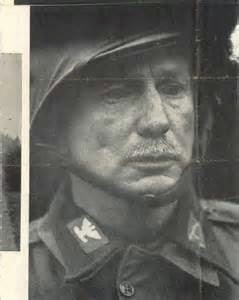
Colonel David H. Hackworth


The following is an exerpt from Col. Hackworth's blog.  You can link to the site by clicking on his image above.


Combat Training Tips - Special Men
Dennis Foley wrote one hell of a good book (Special Men - -Random House/Ivy Books) which I was privileged to write the introduction.
A lot of you have ask that I put the introduction out on the web because it has a fair number of good training lessons.
Feel free to copy it. Stick it in your training notes and your junior leader's heads, the contents, that is..
Foley's book is available everywhere in paperback. And can be ordered in hardback from Doubleday's Military Book club. It is a great read. Dennis spent 17 years with LRRP, Ranger, Special Forces and Airborne units and is a walking junkyard with all the metal he totes around.

Introductionby David Hackworth
I can remember the day Dennis Foley reported in to my parachute battalion in Vietnam as clearly as I remember the day my first child was born. Dennis was a tall, lanky infantry second lieutenant with no special skills except that he was qualified as a 7-1542: Airborne infantry platoon leader. His service record indicated that he was just another untried lieutenant joining his first combat unit. Yet there was something about him. It wasn't his youthful eagerness - most shavetails are eager - or that he was the son of a distinguished combat officer - many of the officers in the battalion were warrior bred and reared - or that he had risen through the enlisted ranks and graduated from Fort Benning's tough infantry officer candidate school (OCS), which as a rule produced the most combat-ready platoon leaders. On the surface, there was nothing special about the twenty-one-year-old, but my sixth-sense antenna told me he was worth watching. I decided to keep him close at hand. I assigned Foley to the battalion's elite Airborne Ranger special operations unit, the Tiger Force. (The first TOE LRRP unit formed in Vietnam which was modeled after my Korean War Raider unit.)
Like most former sergeants, I had little use for second lieutenants. They could get a platoon in trouble faster than a stroll through a minefield. George Patton is reported to have said that an officer wasn't worth a pinch of salt until he'd been with troops for ten years, and I share the same view.
I never could figure out army logic. The leadership of an infantry platoon is the most demanding and dangerous job in the armed forces, yet the infantry platoon is commanded by the most inexperienced and least qualified guys in the military. I believed, and still do, that a lieutenant should serve in the infantry enlisted ranks for at least three years, and if he doesn't prove himself a leader by at least making buck sergeant, he should not go on to a commissioning school such as West Point, Annapolis, ROTC, or OCS. In sum, a lieutenant should shovel shit before he rides the horse. This approach will teach him to be street-wise and have respect for his men, because he will have been there and done that.
Over the bullet-splattered months that followed, my reading on Foley was proven to he dead on. He was an exception to the green-lieutenant rule. The something special my antenna picked up was his great heart, which pumped out a keen spirit; his extraordinary brightness, which allowed him to make complex things simple; his pit bull-like tenacity and unflinching loyalty to his troops and then to his bosses - in that order - which is the way it should be.
Foley was an up-front kind of leader and I frequently found myself on his flank sharing a foxhole in a hot firefight. There, at the bottom line of the soldiering business, I observed firsthand that he was capable, cool, and not afraid to take the high risks that came with his chosen life and death profession.
As is the way with old soldiers who see rare ability in young leaders, I became his mentor. He had the potential of becoming a senior officer and winning battles without taking hard lumps. I tried to pass on my knowledge and give him the assignments that would round him out.
He eventually commanded the Tigers after its skipper, Medal of Honor winner Jim Gardner, was shot down. Later, at Dak To, one of the most fierce, longest-running battles of the Vietnam War, he learned that skippering a battalion in combat is a flat-footed son of a bitch. I was my own operations officer, Foley was my assistant, and through twenty-one sleepless days and nights our battalion kicked the bejesus out of an enemy regiment that was four times bigger, but not one inch badder. Foley learned more there than he could have learned in two years at staff schools or skippering a battalion in peacetime. I believe that soldiers learn by doing, and by God he did a lot of doing in those three long weeks that saw our battalion lose almost half its officers and troopers while killing four times that number of North Vietnamese regulars.
After Dak To, on another battlefield with a different unit, one of my rifle companies needed a swift leadership transfusion. I put out the word, and with the power of my two-star boss, found Foley, who was about to be assigned as a starched briefing officer in some Disneyland east HQ and scooped him up. He quickly transformed a hard-luck company into a hard-core force and started kicking some mean Viet Cong ass.
Then one day I asked him and his tired unit to go that extra mile. They were due to go in reserve and rest after a grueling campaign. Just when they were about to be lifted out, hot intelligence targeted a Viet Cong heavy-weapons outfit in his zone. After a heated argument in which Foley stood tall against going because his troops were too bushed, he launched; lieutenant colonels always win over captains. But it was a bad win on my part. Foley got blown out, and the hot intel target disappeared.
After our hitch in the hard-core battalion, we never served together again. But from the sidelines I watched him climb onward and upward toward the stars that blinked in the distance. And then well, that's his story, which he tells beautifully in the following pages.
After Foley got shot up, I recorded the following notes about infantry lieutenants. Since little changes in infantry combat except how fast you go and how loud the bang, these observations are just as applicable today as they were back in 1969: The average infantry lieutenant who joined my battalion was not prepared to lead a rifle platoon. He was not completely trained in the theory of combat in Vietnam; was extremely weak in soldier management, leadership, practical knowledge, small unit combat operations; and was almost devoid of actual field experience. The old saying, "Good judgment comes from experience and experience is gained from bad judgment" is certainly applicable here. Out of sixty-eight infantry lieutenants who joined the battalion, only two had ever stood in front of a TO&E platoon before. The rest were out of service schools, training centers, and other non-TO&E assignments. As a result of having no experience in the art of handling a platoon, these young and, on the average, well-meaning officers were completely lacking in self-confidence and were, with rare exception, almost valueless as platoon leaders without at least a thirty day OJT period with a "stud-type" platoon leader.
The biggest shortcomings of the young infantry leaders were their failure to be demanding and their reluctance to ensure that their men did the basic things which would keep them alive on the battlefield.
I believe one of the reasons for this deficiency is that many of the social values acquired as a civilian conflict diametrically with what is expected of a leader. A case in point is just one civilian-instilled value that drastically conflicts with combat leadership: popularity.
Great emphasis is placed in the American society to instill the "virtue" of being a popular fellow. The formal part of this training starts at kindergarten when the importance of socializing is first introduced and is thereafter never ending. The informal training begins even earlier, and hence, the young man, when first entering the army, has had about twenty years' indoctrination of "being a nice guy." After four years of college ROTC/military academy training or about a year of basic infantry and OCS training, he is supposed to be the well-prepared leader who always places the welfare of the troops just below the accomplishment of the mission. Wrong. The average leader has a virtual Pavlovian instinct toward being popular. He must be a good guy! Thus, he becomes a "joiner" instead of an "enforcer."
In Vietnam, good guys let their people smoke at night and take portable radios to the field, allowed night ambushes to set up in the abandoned hooch so they could have protection from the rain, and left only one guard by the door so everyone else could get a good night's rest. Good guys let their men leave their boots on for several days, resulting in inordinately severe immersion foot. Good guys didn't check to ensure that their men protected themselves against mosquitoes or took the required malaria pills and salt pills. Good guys ended up killing their men with kindness.
The average young leader in my battalion generally knew what was required, but did not have the moral courage to enforce the rules. He preferred to turn his head and look the other way rather than make vigorous on-the-spot corrections. Deficiencies such as dirty ammunition and weapons, improperly safed weapons and grenades, incorrect camouflage techniques and the improper use of terrain (not using natural cover to provide protection from small-arms fire), and not staying alert to stay alive was common. The end result of this was that the soldiers' habits became sloppier and sloppier, and carelessness ran amuck. This resulted in casualties-casualties that could have been prevented had the leader checked and demanded the small things be done well.
My experience has been that soldiers in combat will only do what is required of them and, if under weak, nice-guy leadership, will try to get away with everything they can. This results in the violation of every basic rule in the book. As an aside, I believe that all the while they are placing their lives in jeopardy, they know they are wrong and will respond to the requirements of a positive, ass-kicking leader. Results: fewer casualties and greater respect for the leader who cares enough for his men to make them do it right.
I believe that another serious shortcoming is the failure to teach leaders the importance of supervision and the techniques of supervising. The average small unit leader seems to take for granted that what he wills will be done, so there is no need to check.
The nature of combat in Vietnam greatly extended this problem because small units normally operated on a widely decentralized basis in rugged terrain that restricted inspection visits from higher headquarters. These conditions generally prohibited the more experienced senior NCOs and officers from checking the platoon and passing along "tips of the trade." Without an experienced, demanding leader, a carelessly led platoon is headed for a violent collision. The infrequency of combat in Vietnam (as compared to World War II or Korea) and the seemingly good security of many areas had a tendency to lull soldiers and leaders into a false sense of safety. Consequently, alertness and security became relaxed and the likelihood of enemy attack increased proportionately. (Mao: "When the enemy is weak: attack.")
The leader must be inculcated with the burning need to keep his people alert and never let their guard down. The leader must be instilled with the need to supervise his people twenty-four hours a day. He must check: fighting position for adequacy; if soldiers know the mission, situation, and where the LPs are; if proper field sanitation is being practiced, if all battlefield debris is destroyed to deny the enemy a source of supply; if his people are all sleeping under cover and protected from "first-round bursts"; if his subordinate leaders are "heads up" and demanding that their men are alert and tightly controlled. A never-ending list of little things must be checked: magazines cleaned, weapons test-fired, LPs and claymores out, sectors of fire known; medics looking at feet, monitoring salt tablets, and malaria pills and watching out for "jungle rot"; stand-to being conducted, to name a few. But the main thing is the leader has to constantly check, following the adage: "The best fertilizer in the world is the boss's footsteps . . . they make things grow."
Small units must train not in the classroom, but in the bush. Here warriors must be taught the gut fundamentals of infantry combat. The basics must he drilled in employing the same instructional techniques as those used in Airborne training. Every block of instruction should be reduced to the salient "points of performance," and each soldier should be required to demonstrate his knowledge by ruthless practical examination. Rommel said, "The best form of welfare for the troops is first-class training, for this saves unnecessary casualties." First-class training means hard work and sacrifice. "The more sweat on the training field, the less blood on the battlefield" is an adage I have always followed, and I'm convinced it keeps the casualty list short.
Cadets and new leaders who show ineptitude should he eliminated and not "recycled," such as that atrocity, Lt. William Calley, who caused the massacre at My Lai. Calley was recycled three times after being found wanting in leadership. He was commissioned in order to show a "low attrition rate" to higher headquarters. The shame of My Lai, more than any major enemy victory, caused the American people to withdraw support for the war effort They said, "Enough is enough."
Dennis Foley's story is an inside view of the United States Army from perhaps its finest pre-Vietnam hour to its darkest period when the Vietnam War almost destroyed it, to its slow post-war turnaround that set the stage for its magnificent performance in Desert Storm.
The army that Private Foley joined in 1962 was, in the vernacular of the day, STRAC--ready to go any time, any place, anywhere, and kick butt big time when it got there. Many of the senior NCOs who trained him wore the Perfect Attendance Badge (Combat Infantry Badge with one star-WWII and Korea) and most of these hard-core mothers, who are the steel backbone of any army, ran their outfits with total professionalism. These were the days before political correctness, "be kind," and "consideration for others" became the order of the day. These hard noncoms were straight out of "From Here to Eternity". They soldiered hard, played and drank hard, and kept their units on their toes with tough love and tougher discipline. Their war experience taught them how to survive and win on the battlefield, and they passed this knowledge on to their young warriors and officers by making them do their soldier drills over and over again. "If you don't get it right in training, you won't get it right in combat and people will get killed," they barked. These were the days when few soldiers or junior officers were married. Soldiers lived in the barracks with their sergeants, and a duty day started at 0500 hours and frequently ended with the last notes of taps. It was a harsh life, but it prepared young Foley and his comrades for the harsher challenges of a distant battlefield, where too many of these wonderful noncoms were wasted in a war that only the people down in the rifle units understood; the generals and colonels who passed blindly through their units to get their tickets punched seldom asked these old pros.
So the brass, flying overhead in their choppers, went on failing to understand the nature of the war, and finally, three years after I first met Foley and he joined me in the Delta, there were few regular noncoms left. They were all dead or so shot up they weren't fit for regular infantry duty or, after having two or three wars under their pistol belts, hung up their rifles and joined the ranks of the retired army.
Foley graphically tells this story, which thousands of other young army and Marine officers painfully experienced in Vietnam. Many had to immediately pick up the chips without being able to be pulled along by an old pro sergeant who spoon-fed his new officer boss until he could eat by himself.
Foley's story is a good primer on how a leader develops after he leaves Fort Benning or Quantico with a head chock full of information and the back of his car even fuller with how-to-lead-and-fight books. And with all of this knowledge, how, when he gets on the killing field and the first bullet whizzes over his head, all electricity to his brain shuts off and fear takes over.
School cannot totally prepare a leader for this shock. But isolating the essentials can. If the basics, the fundamentals, are learned by rote, much like a boxer is drilled to counter punch, automatically reacting with a left cross, right hook or "the bomb" right down the middle without a conscious thought clicking through his brain, he'll get along just fine. And after each contact, the light will grow brighter as his experience level grows. It doesn't mean he won't be scared, but at least he won't be in the dark.
War is so simple, yet the military school system makes it so bloody complicated. The key to winning in battle is to sneak up on your opponent and belt the shit out of him from behind as hard and quickly as you can before he figures out you're in the neighborhood, and then scoot the hell out of there.
Besides having experienced noncoms to lead new small-unit officers through the minefields of a combat command, the best way for a new leader to get ready and learn his stuff is to read and reread books by combat warriors who have been there. Rommel's "Attacks", Patton's "War as I Knew It", Sajer's "The Forgotten Soldier", and my book, "About Face", are good starters. Don't bother with Clausewitz's convoluted double-talk, but make "The Art of War" by Sun Tzu your bible. It was written around 400 B.C. and his short and simple lessons of war are every bit as valuable today as they were then. I've been carrying Sun Tzu and reading it almost daily since I first picked it up in 1950. After some good OJT, the knowledge in these books and others will allow you to lead well, fight smart, and take care of your warriors.
A good knowledge of military history, like attending Airborne, Ranger, and Special Forces courses, is a confidence builder. In small-unit leaders, confidence, like fear, is contagious. Troopers can feel it, see it, smell it, and it will rub off on soldiers from a platoon to a division as quickly as a good rumor rumbles out of the latrine.
Confidence produces courage. Most leaders or warriors are not born with a double basic load of guts. Most leaders and warriors are as scared as the next guy in their first or 100th firefight, but if they are confident that they are tactically proficient and their unit is squared away and motivated by a strong sense of duty to accomplish the mission, the courage that is needed to do what many will view as impossible will be there. Mouths may be dry, guts may chum and hands shake, but when the slugs start snapping, the prepared leader will be as cool as Clint Eastwood on the outside and tell his boys, "Let's make somebody's day. Follow me." And no one will know who is scared out of their brain.
Besides being one hell of a job, leading men into battle is the ultimate responsibility. On the battlefield decisions are made in a split second, such as "go left" or "go right" or "go straight ahead," and right or wrong, good or bad, people get killed. Leaders carry the scars of those decisions for the rest of their lives. Later, battle scenes keep playing back. "Why didn't I wait?" "Why didn't I bring in more fire?" "Why didn't I go myself?" haunt the veteran day and night until he checks out of the net. Good preparation, hard training, and attention to detail keep nightmares to a minimum.
Dennis Foley's memoirs of his days as a small-unit combat leader give an excellent inside view of the United States Army during its troublesome Vietnam period, and you can almost feel, as you turn the pages, how a young combat leader grows from a scared, unsure-of-himself liability taking over his first platoon to an old pro company commander who has his shit together.
Foley's story is well told. Each page is alive with what soldiering is about: the relentless drill, excitement, boredom, the highs and lows and the brotherhood that, in the end, makes the whole journey a special trip among special men.
Dennis Foley served his country and men well, and the journey that unfolds in the following pages passes on his combat experience to present and future generations of infantry small-unit leaders.
To be a combat leader in the profession of arms is the most noble, deadly, and exciting occupation going. Its rewards are few, but if, at the end of the day, his men say, "He's a good man," those few words make a pretty good final epitaph for a war fighter.

As I look back on three decades of knowing the author, it's a pleasure to say Foley is a good man, and his primer on war fighting is an equally good read for warriors past, present, and future.